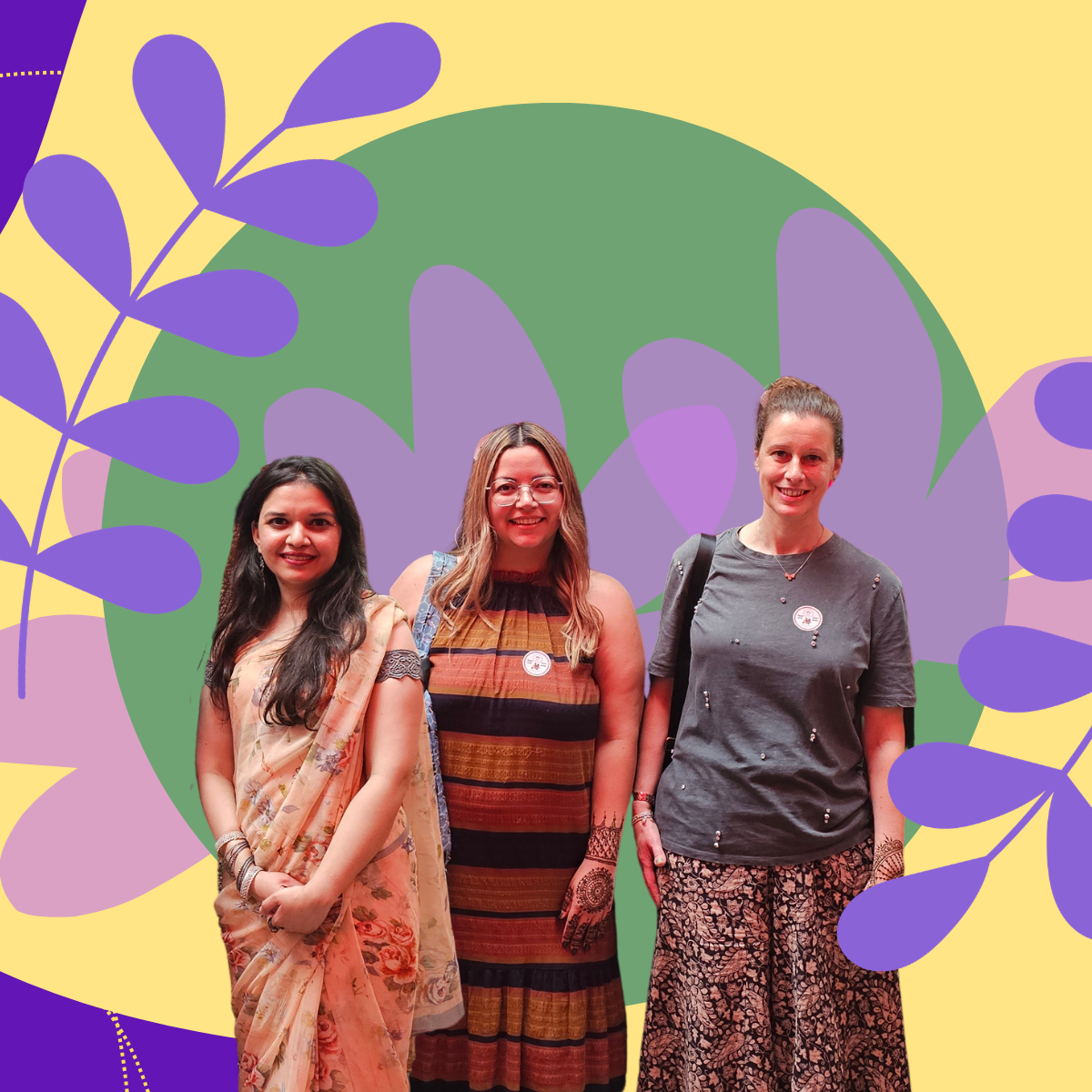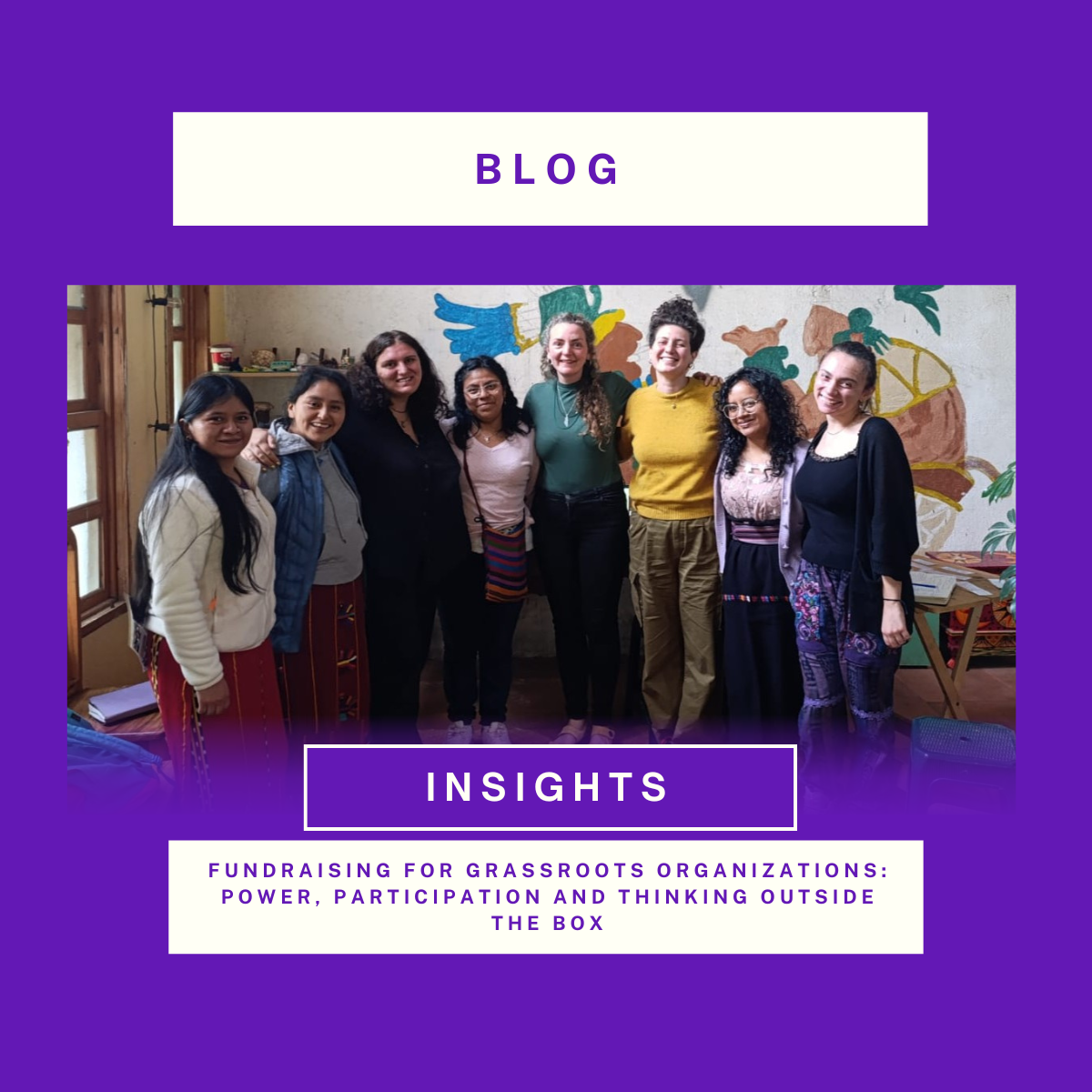
Last month, eight women from five different organisations gathered at my house and nascent environmental education project, Casagua, for an Intro to Fundraising workshop. The organisations represented an array of focus areas, including women’s rights, higher education access, rural solar electrification, territorial defence and children’s play-based learning.
We sat in a circle near our growing collection of children’s library books and instruments. The Sierra de los Cuchumatanes, Central America’s highest non-volcanic mountain range, rises steeply just behind the house and there was a chill in the air. However, we were soon on our feet and moving around, matching different printed fundraising ideas with practical examples and discussing the importance of diversifying our income streams.
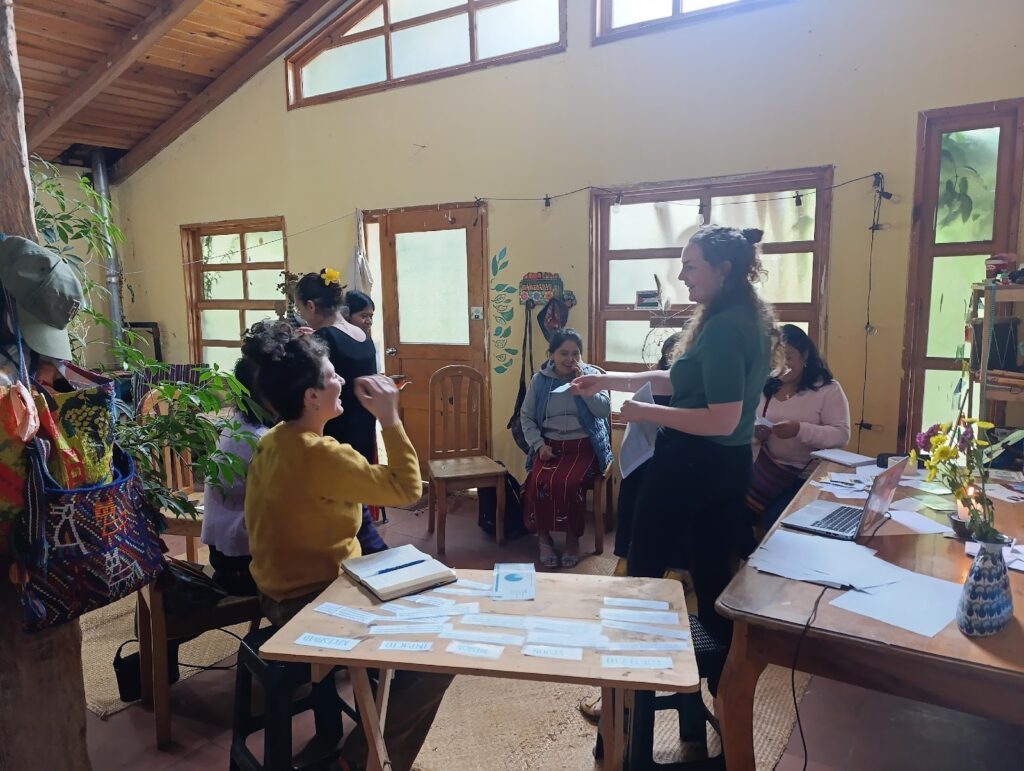
“If there’s one thing I want you to remember from this workshop, it’s the phrase, diversificación de fondos,” I say to the group. As co-founder and co-director of Casagua, a small grassroots non-profit offering weekly arts and environmental education workshops to Maya Ixil children, our fundraising efforts are only just beginning. We registered as an NGO in Scotland a year ago, a tactical decision to increase the possibility of Europe-based individual giving as well as avoid – for the moment – costly and bureaucratic registration processes in Guatemala. With a UK charity bank account, we can easily integrate Stripe donate buttons on our website and email campaigns, gathering donations from different countries. We can also apply to a larger pool of Trusts and Foundations, given that many UK-based grant-makers require registration with the Charity Commission or the Scottish equivalent, OSCR.
According to a University of Birmingham report, over half of UK charities receive at least 90% of their funding from a single income stream.1 Plus, securing that income is ever more competitive; the Charities Aid Foundation’s UK Giving Report reports that only half of people who donated last year did so again in 2025.2
Looking around the circle of non-profit professionals gathered at my fundraising workshop, it initially seemed hard to avoid painting a picture of doom and gloom.
We are all working in the Ixil Region, a remote, under-served part of Guatemala that was the epicentre of the 36-year armed conflict and campaign of genocidal state violence against the Mayan people. Each of us is supporting programmes that strengthen and protect indigenous women’s rights – an area that receives 1.4% of all global funding for women and girls, according to IFIP, International Funders for Indigenous People.
As well as facilitating children’s creative learning opportunities with Casagua, I work as Fundraising and Partnerships Manager for Barefoot College Latin America. Over a 10-week residential programme at our centre in the Batzul community of Chajul, we train indigenous women from off-grid, last-mile communities to become solar engineers who assemble, install, repair and maintain solar home lighting systems. Our mission is to democratise, demystify and decentralise technology and education, promoting self-sufficiency, resilience and autonomy for communities that live in rural poverty.
The recent Better Funding blog on Funds that Set Us Free resonates for us at Barefoot. Almost all of our income is project-specific, supporting the training costs for the solar engineers and the pricey equipment costs of solar home lighting systems imported from our suppliers and sister organisation in India. To put it frankly, we are really in need of unrestricted funding. Flexible, capacity-building grants would allow us to take a much-needed breath and pause. As Emily and Mae’s toolkit rightly expresses, the constant prioritisation of immediate needs over long-term organisational resilience takes a toll. When funders decide to give support “beyond the financial”, our organisations can slowly come out of survival mode. We can invest in staff training, institutional strengthening and strategic planning. And when funders say, “don’t worry about an end-of-year report, just send us some good photos and a paragraph or two,” our sigh of relief is audible!
We have been lucky enough to receive unrestricted funding from the foundation Focus Central America (FCA) this year. Their application process involved a series of video call interviews, so we were able to bring in our Chajul-based programme coordinator, Ixmukané, who wouldn’t normally be involved in grant-writing. We didn’t have to supply a budget breakdown and were given the opportunity to speak through our current needs and shortfalls. FCA’s funding “is aimed at populations who have historically been underserved by philanthropy and is paired with community building and educational opportunities for organisational strengthening.” We are now part of FCA’s partner Whatsapp group with 45 members, fellow NGOs working on a range of focus areas across Guatemala. In the group and on email, grant opportunities are circulated at least once a month, as well as various professional webinars and wellbeing sessions offered by a mental health consultancy. For us at Barefoot, this support is the definition of flexible, partner-led funding that goes beyond the financial.
In describing flexible, trust-based grant-making to the circle of women in the fundraising workshop, everyone’s eyes lit up. Unfortunately, many small grassroots NGOs don’t have this kind of support and don’t know where to look for it. I am acutely aware of my positionality and power as a white, English-speaking, European fundraiser. For many of the women seated next to me in the circle, these privileges are non-existent and the search for funding is even harder.
In under-resourced programmes and small teams where staff are working across multiple responsibilities, it is challenging to develop a robust fundraising strategy while also monitoring and evaluating impact. In our multilingual region of Guatemala where indigenous women are systemically marginalised from education and employment, it is imperative to design impact measurement systems where conversations flow orally and creatively. For a programme participant who can’t read or write, perhaps drawing a picture, map-making or colour-coding is an accessible alternative. Barefoot College Latin America’s programmes use popular education methodologies to engage women with limited literacy skills. The ideal project reporting also implements this commitment to equity and participation, but much of the time, donor reporting requirements don’t match the organisation’s internal systems. Surely our project reporting should also be an opportunity for us too to learn, reflect and implement changes and improvements in our programmes?
As we near the end of the year, we’re beginning to think about Casagua’s first annual report requirement for the Scottish charity register. During one of our weekly workshops, I hastily noted down children’s responses called out during circle time. We asked them for a word that came to mind when they thought about Casagua. Some said pollination, others planting, insects or water source. Later, we compared their drawings representing biodiversity from the beginning of the year to now, late November. We made maps of our neighbourhood, town and watershed, environmental art we aim to include in our first annual report as evidence of place-based education in practice.
In our workshops, we talk to the children about reciprocity and interdependence. It is inspiring to see that these natural systems and ancestral values that prioritise care and wellbeing are slowly integrating into the fundraising sector too. In my work, I often speak about and increasingly hear reflected back to me words and phrases like; participation, flexibility, equitable access, shifting the power, thinking outside the box.
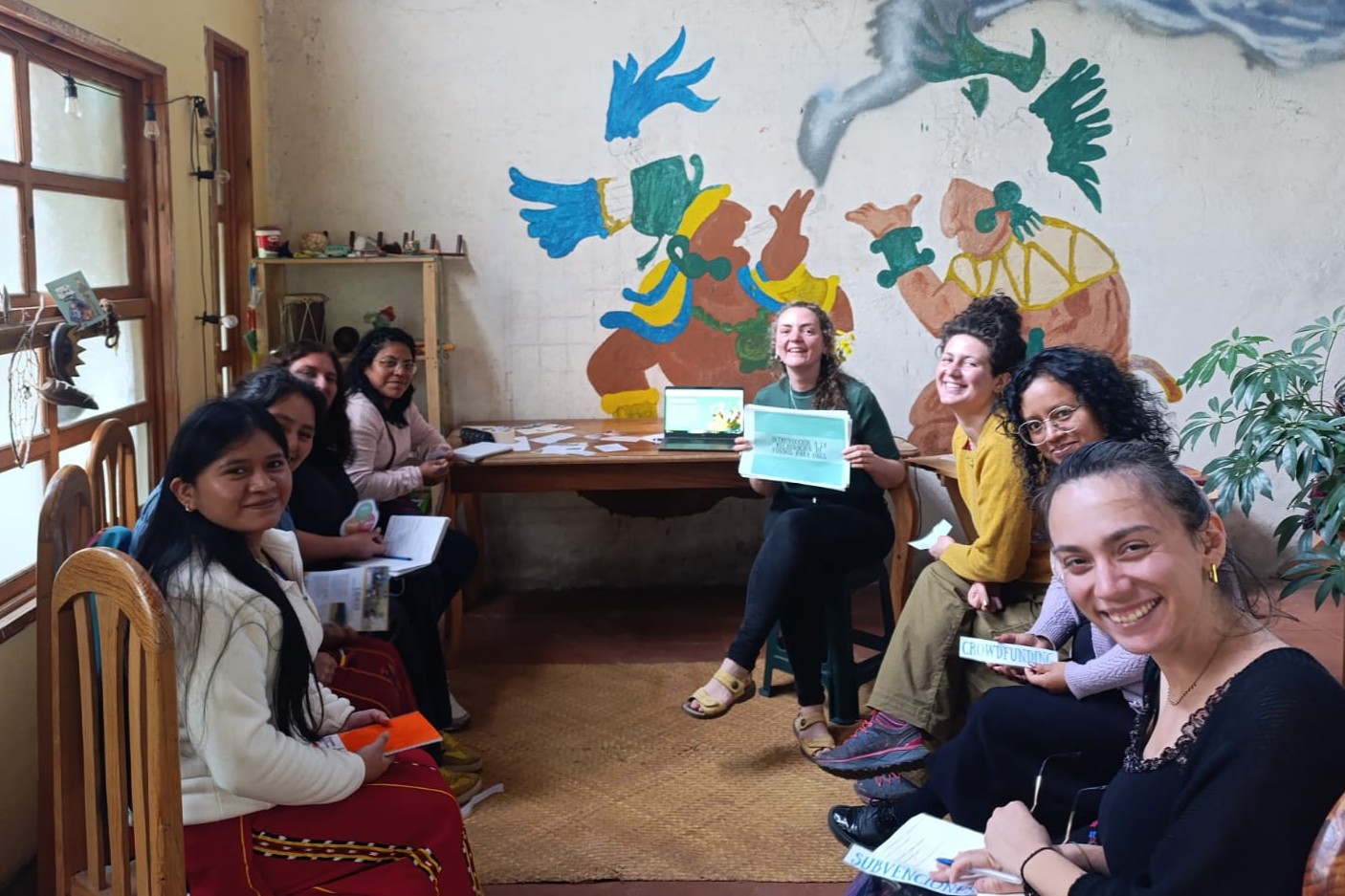
In community with the women who came to learn and chat about fundraising at Casagua, we planned an email campaign, discussed crowdfunding, questioned tactics for sustainability like launching a social enterprise or doing a traditional textiles sale. Fundraising can be lonely work, and yet our entire sector relies on it.
When we take steps towards collective action and think outside of the donor-defined box, we open doors, we remove limitations and we shift power towards participation. In rural Guatemala, a small circle of women sharing ideas and planning strategies could be the ripple in the ocean that may just be part of a turning tide.
- https://www.birmingham.ac.uk/documents/college-social-sciences/social-policy/tsrc/incomedependencyanddiversification.pdf ↩︎
- https://www.ncvo.org.uk/news-and-insights/news-index/the-road-ahead-2025/challenges/ ↩︎
About the author
Catriona Spaven-Donn
Catriona is the co-founder and co-director of Casagua, a grassroots environmental education and agroecology project in Guatemala’s indigenous western highlands. She also works as Fundraising and Partnerships Manager for Barefoot College Latin America, promoting gender and climate justice and resilience for rural communities. She holds an MPhil in Latin American Studies from the University of Cambridge and post-graduate studies in Outdoor Environmental Education from the University of Edinburgh, her hometown. She has worked for women’s and children’s rights programmes with refugees and indigenous communities in Canada, Peru, Guatemala and Scotland and firmly believes that the solutions to the world’s multiple crises lie in the strengthening of our intergenerational connection to land and nature.
Learn more about Casagua and Barefoot College Latin America.