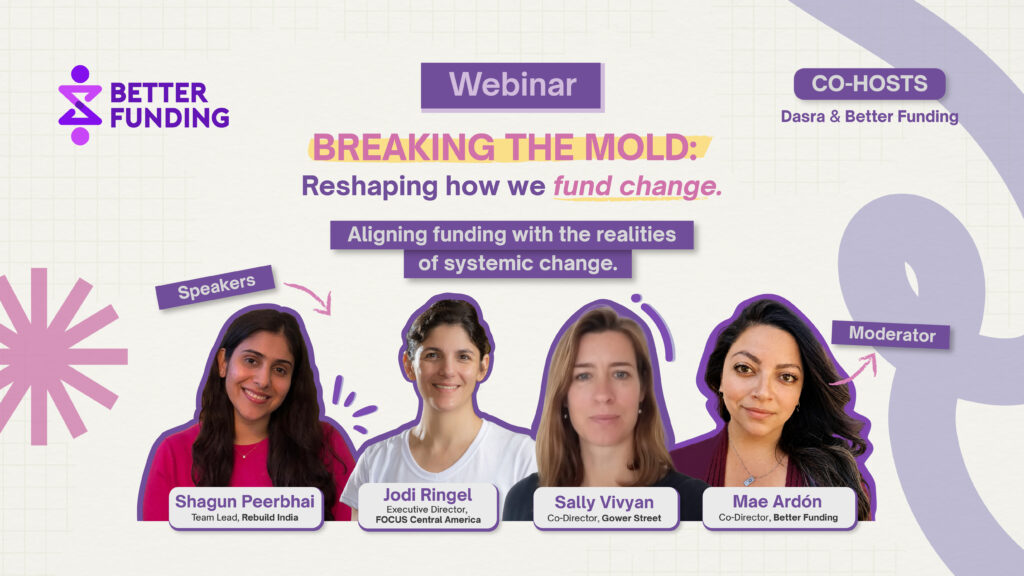
Key Takeaways from “Breaking the Mold: Reshaping How We Fund Change”
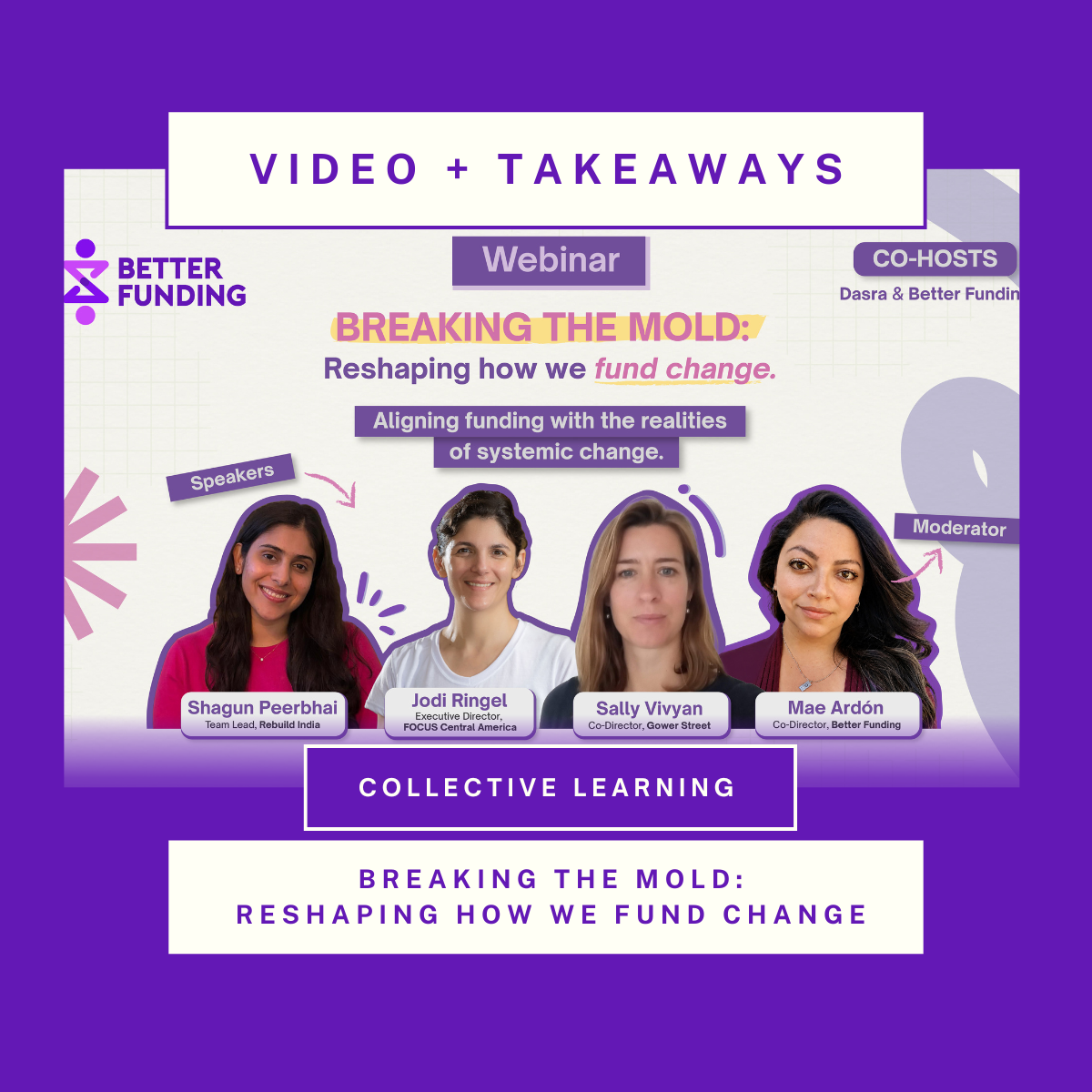
In this conversation, Shagun Peerbhai (Rebuild India Fund), Jodi Ringel(Focus Central America), and Sally Vivyan (Gower Street), moderated by Mae Ardón (Better Funding) – shared practical examples of what becomes possible when funding moves beyond rigid, transactional models and toward more relational, context-responsive approaches. Drawing from experiences across India, Central America, Ghana, and the UK, the discussion explored how funders are adapting their practices to better align with the realities of grassroots and systemic change.
Across the conversation, several themes emerged clearly:
Relationships are not an “extra”, they are the infrastructure
All three organisations highlighted that meaningful change requires moving beyond distant grantmaking relationships. Trust, regular conversations, long-term accompaniment, and real understanding of context create stronger partnerships and more responsive funding practices. Relationship-building was not framed as separate from accountability, but as a more effective form of it.
Flexibility and accountability can coexist
A recurring theme throughout the conversation was that flexibility does not mean the absence of rigor. The speakers shared how accountability can be strengthened through trust-based relationships, community-led governance structures, meaningful due diligence, ongoing dialogue, and contextual understanding, rather than relying solely on burdensome reporting requirements.
Proximate leadership matters
Rebuild India Fund shared how they intentionally source and support organisations led by people closest to the realities they are addressing. Their recommendation-based model, multilingual engagement process, and participatory investment committee all reflect an approach grounded in trust, lived experience, and ecosystem knowledge.
Capacity strengthening should respond to real conditions
Focus Central America reflected on how “capacity building” often fails when disconnected from the realities organisations are navigating. Their approach centres optional (not mandatory) learning opportunities, wellness support, security training, and peer connection, while recognising the pressures small grassroots organisations already carry.
Ecosystem strengthening takes time
One of the strongest reflections throughout the webinar was that collaboration, trust, and collective action cannot be rushed or forced. Speakers shared how ecosystems evolve gradually through repeated connection, shared spaces, vulnerability, and consistency over time. Several examples demonstrated how years of relationship-building eventually led to collaboration, mutual support, and collective advocacy among organisations.
Language shapes relationships
The discussion also explored how seemingly small shifts in language can transform how funders engage with organisations. Moving away from terms like “beneficiaries” or “grantees” toward language rooted in partnership and community reflects a deeper shift in mindset and power dynamics.
Funders also need to adapt their own structures
Another important thread throughout the session was the responsibility funders hold in adapting their own systems, expectations, timelines, and practices. Whether through reducing application burdens, prioritising conversations over proposals, funding unrestricted support, or creating space for collaboration, the speakers demonstrated that more equitable funding requires operational changes, not just stated values.
Community and collaboration are essential for long-term change
The webinar repeatedly returned to the idea that isolated interventions rarely create systemic change. The speakers shared examples of how bringing organisations together, supporting peer learning, funding collaboratives, and investing in ecosystems can strengthen resilience, leadership, and collective impact over time.
As the session closed, the speakers left participants with a shared reflection: listen to partners, meet communities where they are, and place relationships at the centre of funding practice.
Watch the full video here:
In Collaboration with:
This collective learning space was co-organised and co-hosted with the Rebuild India Fund (an initiative by Dasra). Learn more about this initiative, supporting proximate leaders and +120 NGO partners through sustainable funding across India, empowering communities for lasting social change. Or get in touch with Mishri Jain.