Funds That Set Us Free
As civil society organizations, we’ve taken on the task of proposing solutions to the pain we experience in the face of the world’s conflicts. Some of us have chosen to work with our own resources; others, through business models that generate income and allow us to cover our needs. Many of us have found the courage to enter the world of grantseeking, and some of us have learned to diversify our approaches and do a little bit of everything.
One of the core pillars that sustains nonprofit organizations is fundraising — the ongoing effort to secure resources for our operations. Today, we also refer to it as resource mobilization, because we’ve come to understand that it’s no longer just about raising money or in-kind support. It’s about recognizing that any resource that eases a concern falls under the responsibility of this “department.” With experience, you learn that the exchanges and favors often coming from the very communities we serve are also valuable resources. These are secured by pulling on subtle, clever threads that hold our work together when monetary funds don’t arrive. And yes, that too is resource mobilization.
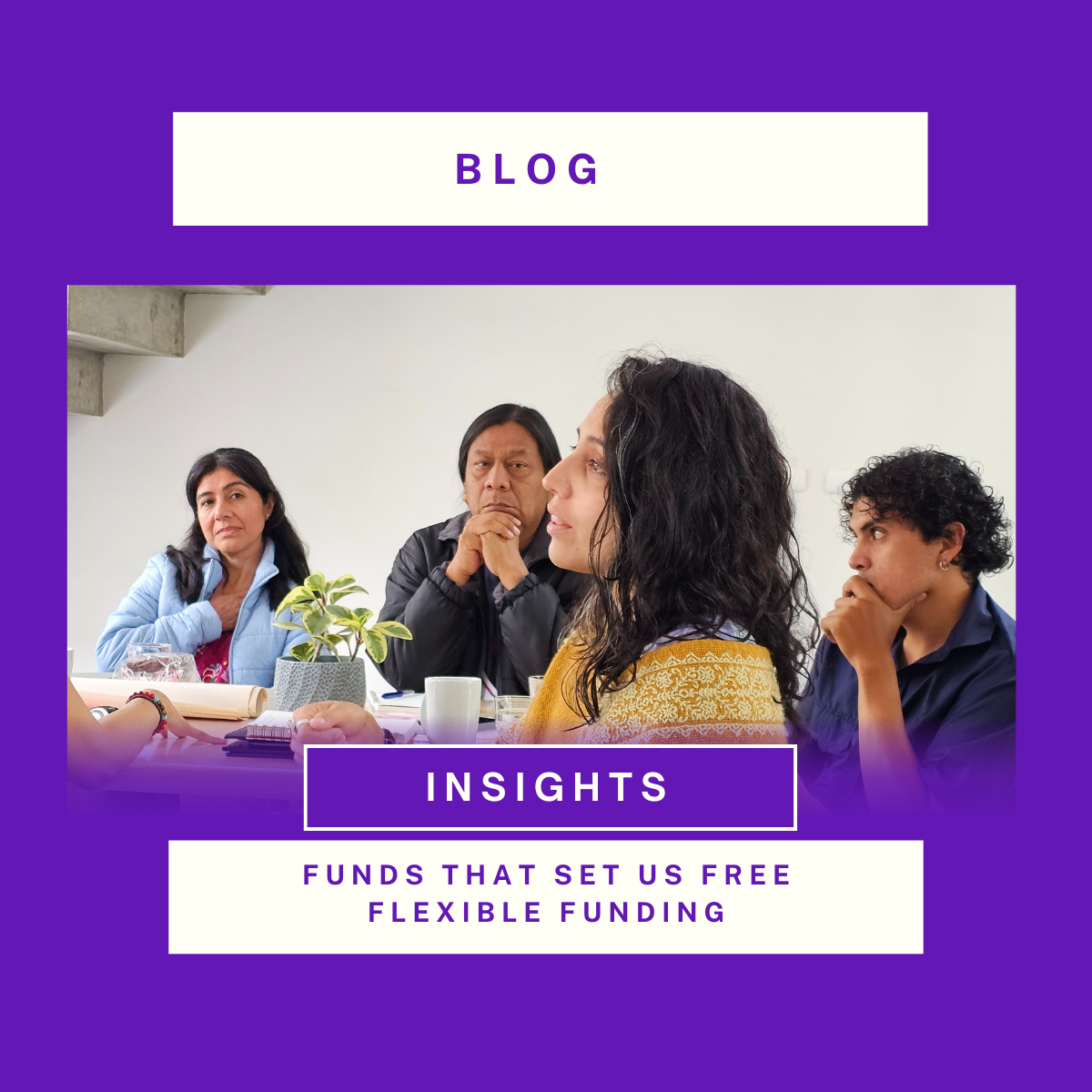
There are many loose threads in the oversized shirt of “managing solutions,” but one we don’t talk about enough is the kind of funding that gives us freedom — what’s known in the field as unrestricted or flexible funding. This is the type of funding that allows us to cover costs that didn’t make it into a donor-approved budget or unexpected expenses that arise from emergencies or crises. In many cases, these are also the funds that allow us to guarantee dignified working conditions for those of us who make up our organizations.
As resource mobilizers, we must always keep in mind that every fund comes with its own process and requirements. And while there is a growing shift toward flexibility and building trust-based relationships with donors — relationships that allow us to decide how resources are used — the truth is that many limitations still exist. Salaries and benefits, legal and accounting processes, bank fees, travel expenses, training, insurance, maintenance… these are just a few of the budget lines that remain heavily restricted or even excluded in donor applications. I like to call this “the moral administration of funding”: a socio-economic mechanism embedded in the values and mental models of those who fundraise and manage resources within nonprofits. Because ideas of what is enough, what is acceptable, or even what is fair are always filtered through the context and background of the donor, as well as the priorities and needs of each organization.
At Una Mano para Oaxaca (UMPO) — a collective of five women — we juggle financing, implementation, relationship-building, and all the behind-the-scenes work that nourishes the organization. We’ve learned that we constantly have to reinvent ourselves to stretch our resources, and that those resources need to be ones we truly have agency over, ones we can direct toward what we actually need.
Along the way, we’ve encountered gaps and shortages in basic operational resources, and that’s when we discovered our most loyal lifeline: unrestricted funding.
Where does this type of funding come from? Often, from a donor who contributes from their own pocket and doesn’t need to report back to anyone but themselves, someone who understands that achieving results requires covering many everyday expenses. In our case, we know UMPO has been able to sustain itself over time because we’ve found various ways to access flexible funding: digital fundraising platforms, individual donors through creative campaigns, generous friends who support when they can, and of course, alliances with foundations that have fought to make their contributions more flexible.
These foundations recognize that an organization like ours has the same structural needs as any business, and that those of us who collaborate have the same right as anyone else to live fully, without having to maintain double or triple work shifts. Because if our organizations aren’t well internally, how could we ever care for others well?
About the Author:
Alejandra Rosado Martínez
Alejandra Rosado is co-founder and general coordinator of Una Mano para Oaxaca (UMPO). She holds a degree in Food Industries Engineering from ITESM (Querétaro campus) and, since 2015, has supported social projects focused on livelihood self-management.
With UMPO, Alejandra has worked alongside national and international funders to strengthen the governance and agency of women and children from Indigenous communities, primarily through the preservation of local knowledge and traditional crafts in the Isthmus of Tehuantepec, Oaxaca. As the organization continues to grow and evolve, Alejandra is also studying pedagogy at the Center for Anthroposophic Development, aiming to contribute an educational lens that enriches the community programs she supports.